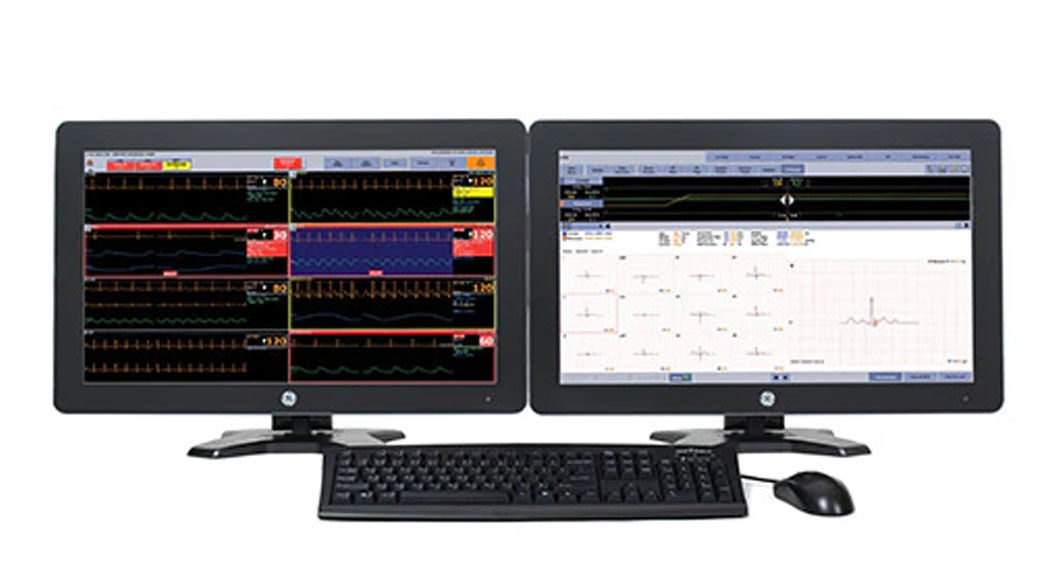
GE’s ApexPro family of transmitters, which includes the Carescape T14, Carescape T4, ApexPro CH, and ApexPro telemetry transmitters, is one of the most widely deployed units in hospital step-down and med-surg telemetry fleets—and one of the most commonly misdiagnosed when it starts acting up. Because the ApexPro family has been in service across so many facilities for so many years, biomedical teams frequently run into the same handful of failure patterns. Knowing what they are and what it takes to fix them can save a facility from an unnecessary capital replacement.
The Most Common ApexPro family Failure Points
Three issues account for the large majority of ApexPro CH service calls we see: battery contact corrosion causing intermittent dropout, lead-wire connector wear leading to noisy or lost waveforms, and case/latch damage from years of being dropped, clipped, and re-clipped onto patient gowns and improper cleaning and sanitizing. None of these are reasons to pull a unit out of service permanently — they’re reasons to get it in front of a technician who works on GE telemetry hardware every day and knows exactly where to look.
The harder failures to catch are intermittent RF transmission problems. A transmitter that tests fine on the bench but drops signal sporadically on the floor is usually an antenna or internal RF module issue, not a software problem — and it’s exactly the kind of fault that gets missed without proper GE-specific diagnostic procedures and test equipment.
Repair vs. Replace: Running the Real Numbers
A new GE telemetry system is a meaningful capital expense, and most facilities don’t need to make that purchase as often as they think. A properly diagnosed and repaired ApexPr0 — new battery contacts, replacement lead-wire connector, case repair, and full RF/functional validation — typically runs a fraction of replacement cost and comes back into service in days, not the weeks a capital purchase order usually takes to clear. For fleets of 20, 50, or 100+ transmitters, that difference compounds fast.
The exception is transmitters with internal RF module failure or significant board-level damage, where repair cost starts approaching replacement cost. A good repair partner will tell you when a unit isn’t worth fixing — not just take the work.
Why GE Heritage Matters for This Repair
Telemetry repair is one of those services where generic biomedical experience isn’t quite enough. GE’s CIC and telemetry server ecosystem — the infrastructure the ApexPro family talks to — has its own quirks, firmware dependencies, and pairing behaviors that only show up when you’ve spent real time inside GE’s platform. Clinical Technology Solutions was founded in 2006 by a former GE Healthcare employee specifically to give hospitals a faster, more affordable alternative to OEM service contracts for GE monitoring and telemetry equipment — and GE transmitter and server repair has been a core part of our depot repair center’s work ever since.
Every ApexPro CH that comes through our depot repair center is diagnosed, repaired to OEM specification, and put through full RF and functional validation before it ships back — with the same no-worry warranty we back every biomedical repair with.
Getting a Fleet Assessed
If your facility is managing a growing pile of “maybe broken” ApexPro CH transmitters, the fastest path forward is a fleet assessment — send us your inventory, and we’ll tell you which units are simple fixes, which need deeper repair, and which have genuinely reached end of life. Most facilities are surprised how many units in the “replace” pile turn out to be a $40 connector away from another two years of service. Learn more about our telemetry systems support or contact our team to schedule an assessment.